Some Ideas on Best Sharpening Stone You Need To Know
.
For those of you who are not familiar with either of these types of whetstones, Japanese Water Stones are mined in the mountains of Japan. They are made from from ancient deposits of metamorphic stone that includes tiny silicate particles suspended in a clay matrix. As an outcome, the fine crystals they produce when honing a knife blade tend to remove the steel extremely rapidly while likewise polishing the surface.
They come from ancient deposits of Novaculite which is believed to be a metamorphic sandstone. Novaculite likewise produces great crystals when usage to sharpen a knife blade and, it too, has the home of eliminating steel reasonably rapidly while also polishing the surface area. Then, there are male made whetstones made from powdered, industrial grade, diamonds in addition to from silicon carbide fertilized ceramic which do not require any sort of lubrication.
The Facts About Diamond Sharpening Stones Uncovered
For circumstances, depending upon the kind of whetstone you are utilizing, you might first need to lube it either with water or honing oil. Then, you begin by grasping the knife by the handle and putting the edge against the whetstone at a 10 degree to 30 degree angle depending on the density of the Primary Bevel and after that, gradually move the whole length of the cutting edge across the whetstone while maintaining the same angle.
Then, you continue to perform this action, alternating from side to side, up until the edge reaches the preferred sharpness. Nevertheless, if you are one of the numerous individuals who has trouble maintaining a constant angle throughout developing, then there are several different types of refining aids on the marketplace that will enable you to develop a great edge on any kind of knife blade.
In addition, the proper sharpening angle is figured out by the relative thickness of the of the Secondary Bevel which is, in turn, governed by the kind of blade grind. Last, as a general guideline, manmade whetstones such as Crystalon and India Stones are the least expensive and work well for cutting preliminary, secondary, bevels or quickly repairing harmed edges whereas, natural whetstones such as Japanese Water Stones and Arkansas Oil Stones are more expensive but, do a better job of developing, exceptionally sharp edges.

The Main Principles Of Oil Stones
However, no matter which type of whet stone you choose, the real key to achieving a very sharp innovative is to preserve a consistent edge bevel angle throughout the whole sharpening procedure.
Many sushi chefs sharpen their precious knives at the end of each work day. Edge life versus ease of sharpening – it depends on you to balance these considerations and pick a proper knife. However, you ought to choose a knife that matches your level of honing experience and fulfills your needs.
As you train your knife against the stone, you start to personalize the edge to your specific needs and sharpening design. With practice and excellent technique, your knife ought to end up being sharper than it remained in its original condition. Action 1: Soak or splash stone with water. Rough and medium stones should be taken in water for 10-15 minutes.
An Unbiased View of Oil Stones
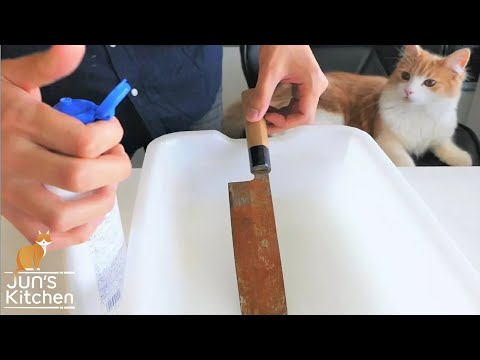
Action 2: Put the stone on wet fabric or base to support while sharpening. A stone base is constantly helpful as it supplies clearance for your knuckles when you hone. It also raises the stone a little off your work surface area, so you have a much better, much easier angle to deal with.
Start with knife suggestion. Use two or 3 fingers of left hand to press edge of blade to stone. Step 4: Keep a firm grip on the knife, with shoulders square to the stone and upper body relaxed. Press edge of blade to stone and push along stone, applying pressure as you move on and releasing pressure as you return blade to beginning position.
When you have a burr, reverse the blade. Start with the suggestion. Put in more pressure on the downward stroke and eliminate burr, or establish a double-sided edge if preferred. Japanese-Style Knives (Yanagi, Takobiki, Usuba, Kamagata Usuba, Deba Knives) Hone the whole cutting edge till there is a slight and even burr on the reverse side.
The Best Strategy To Use For Natural Sharpening Stones
Eliminate the burr with your middle and index finger carefully pressing the edge to the stone and your thumb gently pushing the spinal column. Pressing both sides of the blade preserves the a little concave shape of the reverse side of the blade and helps make future sharpening possible. Think about the movement as if you are "pressing" water off the stone.
For optimum efficiency, it is really important to preserve the original shinogi line. Western-Style Knives Note the angle of knife to stone while sharpening. You should also understand the bevel of your knife prior to sharpening. Angle the knife to develop the cutting edge. A 10º-20º angle is recommended. A smaller sized angle will make a sharper, but weaker cutting edge.
The INSIDER Summary: A dull knife not only makes slicing challenging, utilizing one threatens. If you need to sharpen one but you do not have a sharpener, you can utilize the bottom of a porcelain mug or plate. Just draw your blade down the rough part of the ceramic several times.
Getting The Ceramic Whetstone Sharpener To Work
Luckily, there's an inexpensive and easy repair to all of your cutting issues– even if you don't have a sharpener handy. All you need is a porcelain mug. Draw your blade throughout the rough bit on the bottom several times in fast succession. INSIDER As Delighted honing!.
Japanese whetstones (likewise called water stones)– both natural and synthetic– are understood for their quick-working qualities, not only for Japanese blades, but also for their Western equivalents. The small particles that do the cutting are loosely bound together in the stone, therefore during honing with the whetstone, the surface particles are quickly washed out, allowing brand-new, sharp, particles to start working on the blade.
 The interesting blog 8434